The perfumer and the creative director
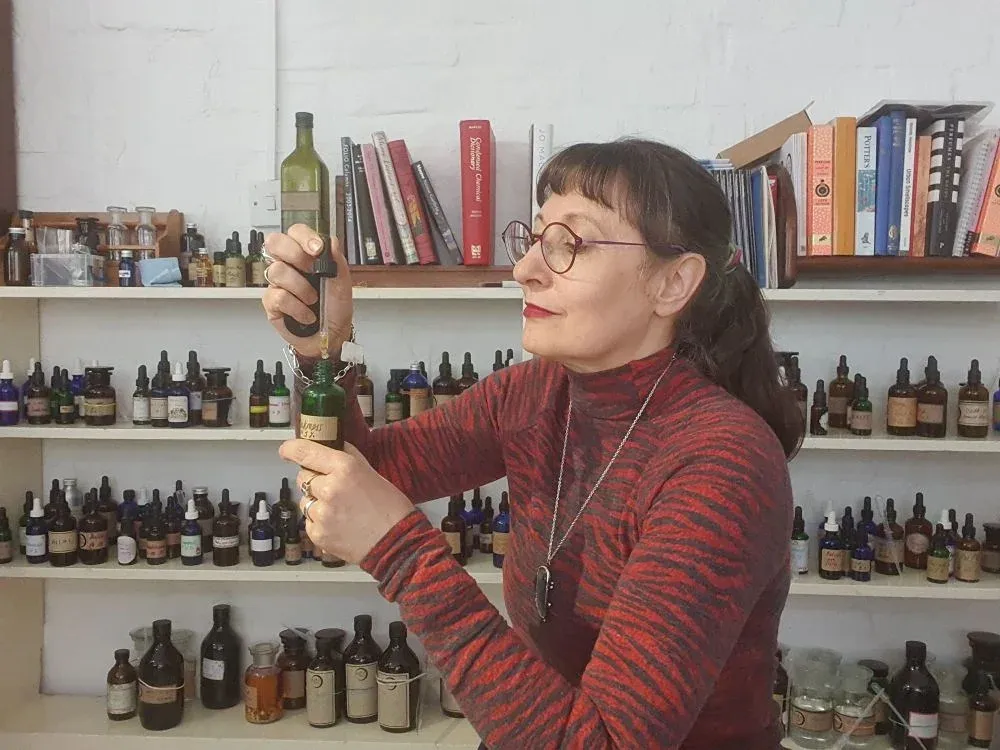
In a film we recently published on Patreon, and then later on YouTube - which I'll share the link to below - Sarah spoke openly about her feelings on the different 'communities' within the perfume industry, and where she believes she fits best.
In this piece she speaks very openly again, but this time it's about the traditional understanding of what a creative director is versus the more recent take on the term.
I've often thought job titles are rather precarious things. Some come with enough assurance that you trust there's only one way to earn them - doctor, lawyer or police officer. Others simply describe a role that's generally understood, such as office manager, hairdresser or mechanic. But then there are titles that are much more abstract and open to interpretation, like consultant, strategist, curator and, indeed, creative director.
They can even be given out upon request, if you're negotiating contract terms. Better yet, if it's your own company, you can call yourself whatever you like.
This isn't exactly the point Sarah is making in this piece. It's more about the relationship between each type of creative director and perfumer, and the importance of being clear about that relationship from the very beginning. But I'll let you read on and find out.
Here's how Sarah explains it:
How to be a creative director
There are two kinds of creative director:
The professional. One who owns or runs the creative division of a perfume company, works with the perfumer to create exactly what’s right for the brand, and takes all the financial risk. This is the traditional sense of the term. The perfumer works closely with the creative director to produce exactly what’s wanted, supplies expertise, gets paid for the work, but usually has no financial interest in the outcome. Leo Crabtree of Beaufort London and Victor Wong of Zoologist are just this kind of creative director.
The project. One who enters into a creative collaboration, and takes none of the financial risk. These collaborations are a recent development, and the term creative director can be used quite lightly. In this case the perfumer is usually the one who owns the company, and takes on the project for the sheer joy of it, and creative fulfilment, and sometimes for publicity. The company which makes the perfume is taking the financial risk.
At any point the perfumer could turn round and say, “I’ve changed my mind, let’s not do it after all,” and go back to working on other projects.
From the perfumer’s point of view, if you’re not paying them for their time, you're an interested party person with a nice idea that might be fascinating, challenging and perhaps financially rewarding to develop.
I’ve often said to workshop visitors who’ve got stuck finishing their fragrances that day, “Don’t worry, you tell me what you want, and I’ll make it for you. You can be the creative director, like Victor at Zoologist.” But really, it’s a job title, a serious full time role, one who is responsible for the creative reputation of the brand, and often its financial success.
Why mention this? Because it’s important to make it clear who owns the perfume when the project is complete.
This needs to be set out at the beginning, whether it’s a type 1 or a type 2 project.
There is no legal ownership of ideas - no intellectual property - only on the actual execution. At the moment perfumes cannot be patented or copyrighted, so perfumers keep their formulas secret.
Does the creative director own the formula, or does it belong to the perfumer? It’s the perfumer. Even if a creative director had paid thousands to develop the fragrance, and they have signed an agreement never to allow anyone else to use it, unless you pay to buy-out the actual formula, the perfumer owns it.
You could have it copied by another company. Professional perfumers can do this. Part of their rigorous training is to copy classic and modern fragrances by smell, usually at a much lower cost. Technical departments can analyse fragrances to get a close approximation of their chemical breakdown. This would probably cost more than buying the formula, also it makes the copier look untrustworthy.
Stay friends, be open, make the agreement clear right at the very beginning. Even if, as creative director, you feel that you have contributed at least half the input to make this fragrance what it has become, it is not yours.
While a creative director thinks, “But you would never have made it without me!” you can guarantee that the perfumer is thinking, “True, but I could have been making something else.”
Consider it like this. A house owner might think that he designed his own home, but you can guarantee that the architect is thinking, “No you didn’t, mate!” because she drew all the plans so that it happened, and added the parts that actually made it work.
_____
AWARDS: Art & Olfaction Awards or Fragrance Foundation - https://www.youtube.com/watch?v=a2-ZpPpGIds
Comments