Coconut in Perfumery
This was written by Sarah in 2020 for her Scenthusiasm friends on Patreon. It was around the time she discovered a natural coconut CO2 extract. Up until then, she had still been creating coconut fragrances but using synthetic materials. This was quite a while ago now, yet already many years into Sarah’s perfumery career, and it just goes to show that our understanding of perfumery, and how we create it, will never be complete, both because we will keep learning more and because new things will become available.
Coconut is one of my favourite notes. It adds an instant sense of joy to any moment. It surprises me that it’s such a divisive scent, but it comes back to something we’ve been talking about a lot lately: how differently we all perceive things, and that there will never be a one-scent-fits-all.
Is there a time that comes to mind when you think of coconuts? In this piece Sarah begins by sharing hers and then explains more about the use of coconut notes in fragrances.
What comes to my mind when I think of coconuts is when I was teaching English at a primary school in Phnom Penh. After the morning ritual of my students and I bowing to each other - they, of course, expected to bow a little deeper as a sign of respect - I’d be relieved of my first duty of the day: standing at the school door as the native English speaker, there to “impress” parents and passersby. Before classes began, I’d dash to the corner where a smiling sun-weathered man stood beside his roadside pile of fifty plus coconuts, motorbike fumes filling the air around him. Using his rusted, well-worn cleaver he'd methodically carve the top off before dropping in a straw and charging me 50 cents. I’d then stand outside the city school for ten minutes, drinking it all in - Cambodia’s capital in the captivating madness of morning rush hour.
Here’s Sarah’s 2020 Scenthusiasm post:
Coconuts
There's nothing like a mention of "coconut" in a notes list to split scent lovers into factions, already choosing their verbal weapons and preparing for online battle. Life is too short to argue over a perfume, really. Also, never sit under a coconut palm; those things actually kill people.
You might have joyful coconut memories, like the time I actually won one from the coconut shy at Carter's Steam Fair, or in the Maldives when some lads shinned up a tree to bring us down a fresh green coconut to drink. Way back when we were children and my dad would drill a hole into the dried brown nut to pour the milk out, then smack it with a hammer so we could eat the flesh.
However, if you've only ever encountered the horrifically named "desiccated coconut" used for baking in the middle of the 20th Century, or you've smelled overly sweetened beach fragrances and sticky sun tan oils, then you might not feel the same fondness.
Until just recently, I thought - indeed I knew, because it was true - that all coconut fragrances were synthetic. Now, the wonders of science (and our friend and fragrance obsessive Harry Sherwood) have introduced me to a natural coconut CO2 extract made by Flavex in Germany. Now I've got new information on the new science, like all seekers after the truth, I have to go back and update everywhere I said that all coconut fragrances were made with synthetics. These CO2 extracts are fabulous, and they are making new truths all the time! I've got a natural cucumber too, in fact I've got two but only one is made from cucumbers. (Of which more later.)
I've got a kilo of this coconut on the way, and I really am going to set up a sharing system, because I don't think I'll need all of it myself. You have to have a limited company and a business registered at a proper manufacturing address to buy it, and the minimum order is 1kg, so many of you can't buy it directly yet.
But what did we do before? Glance at the ever informative Good Scents Company search box, and there is a list as long as your legs of things which smell of coconut. But where would you start?
You start here: gamma nonalactone.
A side note for perfumer makers
One small issue with the Good Scents Company search results is that it gives you "organoleptics" - a list of effects you can get from a material if it's used in certain ways, in different accords. So you'll get a list like: spicy coconut clove celery incense. This is for trans-oak lactone.
I beg your pardon? All from one aromachemical? And the other issue is that it makes you want to smell it to see if it can possibly be true. Don't get sucked in too deeply. It's all very well falling into the rabbit hole, but you do want to come out of the other side into the Wonderland of a finished fragrance. If you stay underground exploring the entire rabbit network, you might never ever make a perfume.
If you're an artisan perfumer, use what you have, or get recommendations and just buy one thing.
I also use methyl laitone, and that doesn't even get a mention in the Good Scents Company coconut list. It's just French for methyl lactone, by the way; a lactone being a thing that makes a creamy or a milky aroma, sometimes heading off a little too closely to butter and cheese. (I've bought a butter C02 extract as well.)
When I first smelled methyl laitone I did not detect even a hint of a coconut aroma; it seemed to me like the still, translucent mist on a lake in winter, with frost on the fields around it. I used it in a bespoke fragrance for Liam Moore, creator of Odou magazine, which was the lightest, coolest, most olfactorily neutral aroma (if you see scents in colour) I think I have ever made. I shall dig out the formula and make it again.
I also have gamma heptalactone and gamma octalactone, which are creamy in slightly different ways but less intensely coconutty.
Here's what I've discovered through making fragrances which have even the slightest bit of creaminess; all it takes is for one person to yell, "COCONUTS!" and some will run screaming to the hills to escape it. Others will buy it without so much as a 2ml taster first.
When I used methyl laitone in Creamy Vanilla Crumble for the creaminess of vanilla custard, it got a coconut mention, and now it's out there. Lines were drawn, teams were chosen. Fortunately on the Fragrantica.com perfume community it names "lactonic" but we got away with it.
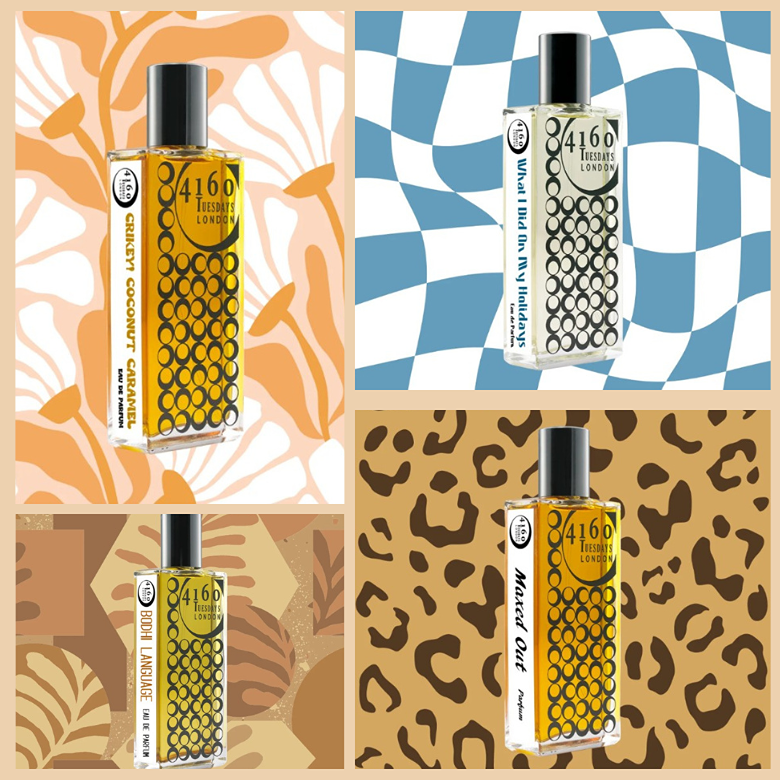
I also sneaked a slight coconut note into 4160Tuesdays' What I Did On My Holidays for the suntan lotion accord, with lavender and melon. A traditional suntan note is made with benzyl salicylate, but that's for another day.
When the new CO2 extract arrives, you can expect a new formula, but in the meantime for the makers, I'll be posting one for you to try which I just made up for one of our customers. A coconut floral, blended with coconut toffee. With artisan perfumery, no one says you can't, so you can do whatever you like.
I rather fancy a dry green coconut aroma, with no sweetness at all.
Comments